


How long do you have to wait to masturbate after your grandfather dies?
Is it until you stop thinking of him lying on a gurney in a morgue? Or until you stop asking yourself if he felt scared in his final moments. If he wanted his wife, or his father, or his only son. Did he think of you? Were you the favourite? How long until his son, my father, can reswallow his feelings, his decades of anger and unsaid affection?
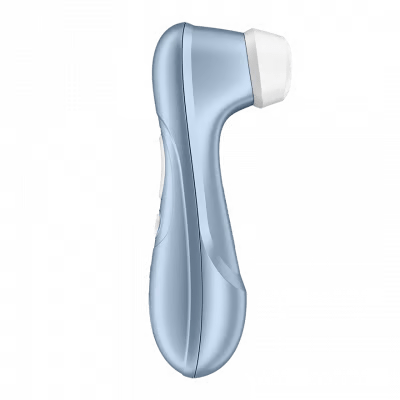
How long will my baby blue Satisfier lie untouched under my mattress? How long until life begins humming again?
Does his doubt of an Abrahamic God change the timeline? Or does my ignorance of his final moments mean I don’t know if he resolved his tryst with God, the one that allowed suffering, violence, and poverty?
Does my lack of belief matter? Does my hope that there is something after death matter more? If not for me, then for him.
How long is long enough to write about masturbation after your grandfather dies? Is the fact that it even crossed my mind perverted enough?
How long do I have to wait to resume living after the God of your family dies, and there is no one left to look to for reason?
When my grandfather died, the house didn’t change. The same chairs. The same paintings. A crossword finished on the coffee table. The same routines, carried on as if nothing had been removed. The only thing that changed was the quiet.
When I was younger, I met my soulmate in my mind. We lived many lives together, went through good times and bad, broke up only so I could imagine him running back to me in the rain. On a long drive with my parents in the front seat, I told him he wasn’t good for me, that I needed to stop chasing bad boys, and that one day I would marry successfully, making him a distant memory.
He was a musician, then a poet. Sometimes, to my dismay, he drove a motorcycle. Then suddenly, he would pick me up in a beat-up Honda Accord. We met in different ways: at a group home for runaway teenagers, at a party, in line at a coffee shop. Each time, he was seventeen, and I was fourteen, going on sixteen.
Each time, he saved me from a strict existence, and we unravelled so I could be free to achieve my ambitions. Even in my dreams, I knew love was the only thing that could hold a woman back from prosperity.
I had learned desire early, how to want without asking, how to imagine without risk. Fantasy asked nothing of my body and even less of my future. It could be revised, abandoned, restarted at will. It left no residue, no witnesses. By the time I was old enough to date, I had already exhausted him.
Real men arrived with the wrong timing, the wrong temperament, and with the wrong demands. It asked me to choose, to stay, to be seen without narration. The imagined man never needed reassurance, never resented my ambition, never asked me to soften. Only existing to be left behind; proof that I could want deeply and still walk away intact.
When I was eighteen, I had sex for the first time in the front seat of a white Pontiac Saturn, with the first boy I thought I had loved. It was in a church parking lot, where nothing sacred happened. I clung to imagination anyway, imagining he knew me well enough to love me, that his hunger for my body meant something beyond instinct. For thirty seconds, I felt only despair, already drifting back toward the solitude of the love that existed solely in my mind. It wasn’t romantic, or even sensual. It was a man taking what he believed he was owed.
By the time I left him behind, I was almost nineteen. He called me cold and stoic. I took it as a compliment. We unravelled completely, and I gave him the last word. I pretended not to crack. I refined my coldness in my mind, withholding enough to stay in control, letting my mind slip back into an old lover’s arms when my body remained present. Desire was easier when it was theoretical.
I continued a forged closeness by imagining the mundane with my adolescent love. Grocery lists, shared jokes, the weight of another body beside mine at night.
When I loved again at 23, my fantasies grew domestic and enduring. We aged together. We separated and found our way back. We ruined each other and met again in another version of ourselves, older and wiser. In every future I allowed myself to imagine, I returned to him. Even as I pushed to my final moments, he was there. Steady and legible. Someone who knew me without having to ask, only my participation was owed. I felt calm inside my fantasies and constrained by the real thing.
I craved to be back in my mind, where fantasy promised escape. But the reality demanded choice. Inside our intimacy was tension, not because I didn’t love him, but because loving him required me to stay, to choose with consequence.
“Would you still love me if I were a worm?” I am sick. I am afflicted, compelled by a streak of spite and cruelty, and, on occasion, I am found to be unattractive.

I think there is something wrong with my heart, my hands, my lymphatic drainage system, and my head. There is something wrong in my head. I can never be sure about what part of me is bad, and doctors offer no assurance. I do, however, hold little respect for medicine or the doctors who practice it. I sat beside premed students in biology lectures long enough to know that they would never know more than I do, or care any more than I could.
I am forever superstitious about my body. There are days I swear I can hear the poison threading itself through my veins as I stifle the urge to pull at my skin and peel back the layer of flesh that has been growing on top of my bones for decades. On other days, I check my chest, my tongue and my eyes, just to verify that my demise wouldn’t arrive unexpectedly and interrupt my worrying.
Of course, I still ask for second opinions; however, I quickly discovered that sharing my fear isn’t always met with understanding. Some misinterpret my apprehension for neuropathy; others offer well-intentioned words of comfort. But, for most, it was just who I was. To my mother, I am not sick, just an evil, wretched woman who was once her daughter. To the men I became acquainted with, I am a woman, and that’s all they could prescribe to my existence.
I swear to them all that I should be dead by now. Perhaps this is God’s idea of a good joke, a prank he played bringing me into existence. Perhaps I was born with the pain imprinted onto me, or maybe I grew tired of swallowing the pain of my mother. But blaming my mother for my body’s shortcomings has grown tired and old.
When I was eight, I forgot how to breathe. It had thrown me into a panic. I had asked my mother to stay with me, a plea for her tenderness. She told me that my worrying was selfish, I was far too young and healthy to think of death, everyone dies, and I should worry more about her mortality than my own. It was this night that I confronted death for the first time. I stared at my bright green walls and wished for them to be black. I wondered why a God would be so cruel to throw me into existence only to die, painfully or painlessly; it wouldn’t matter, as then, I would cease to exist and wouldn’t have to recall his cruelty.
This is also the night I doubted God. I had never grown up in a religious family, but at some point, I wish I had. I liked the idea of a heaven and prayers, like a fairy godmother, but with more fine print. Sometimes I would pretend to pray, fake it until he believed me and granted my dog immortality. It never happened. My childhood dog died at 13 and a half.
My mortality became a haunting whisper in every silence. An uninvited guest that lingers in the back of my mind, prodding me to entertain them at all the wrong moments. Sometimes I stare at my reflection long enough and wonder if I could think away the fragile line that separates me from eternity, wondering if the weight of mortality is heavy enough to keep me alive. I’m tired of the hatred of my skin and counting the breaths until the next is accompanied by my last. I wish I could say I had grown resilient through my constant worry.
I had every intention of being dead long ago. Waiting for moments to pass before I could say I lived enough. I never got there, and I fear I never will. I feel an obligation to tell you that I will not survive this lifetime, nor will you or anyone else who has ever loved me. A servant strung to the cross of the bitterness of the very thing that ties me to the rest of humanity, I want nothing now but survival.
I don’t know when I will die, but what I do know for certain is that I will either die loving you or missing you. An unfortunate circumstance, for which I blame you entirely.

Summer. I had met my best friend for what I can now assume would be the last time.
I graduated from university at 21, born into adulthood at the height of a global pandemic. For two years, I felt 16 again. Virginal, antisocial, drinking in my parents’ basement, sneaking hits of weed in my childhood closet. Staying up until 4 a.m. to avoid thoughts of death. Just this time, I had a bachelor’s degree.
My friends had been my roommates our last year of uni. We lived in squalor; thick, sticky substance caked the floors, sewage poured into our basement, and the vents leaked mould. None of us would live this poorly again. But for eight months, we bonded over disgust, over pain, and most of all, over not knowing the future. Each of us played a different role. We had problems with each other, but they never came between us. At least not until we grew up.
I had met my best friend in our second year when we were partnered for a chemistry lab. She was an enigma to me. Beautiful. Smart. Untouchable. The first time we went out together, we had just finished the exam for CHEM 222, and I had sworn I had just failed. We agreed to get drunk to walk by the house of the guy I had a crush on. To talk loudly and hope he saw me. We never spoke.
We went to my house, where I lived with two ex-friends, who were out of the house. One was studying, the other was at her boyfriend’s. We took the remaining two grams of mushrooms I had from early spring. We finished off the last half of a 26-oz bottle of gin. I remember saying something to the effect of, I hate gin, before having the last drop.
I liked being drunk. For four years, I was mostly drunk. Sometimes high. Sometimes both.
We went out to the main street where the college bars stood side by side. You never had to go more than 3 blocks to get anywhere in this town. We went into one bar, got a pitcher, and then left to go to the bar next door. This one had dancing. Usually country music. It was always country music in this town. At this point, I was buzzed, and the mushrooms had me giggling and wearing a smile that stretched so far it hurt.
We got in quickly. Most people were in exams or had already left for the summer. We got in, I bought her a shot, we flirted with some US army guys from the base in the town over for some free shots. We ran away. The army men were always touchy and expectant, but always willing to buy you a drink.
The night began to slip. But we were dancing. We were laughing. We were having fun. We left after last call.
We picked up a pizza. I cried in the bathroom. I cried on the way home. For the life of me, I forgot why I cried, but I couldn’t stop. I dropped her off at her place and went to mine. I couldn’t stop crying. I lay in bed, world spinning, eyes closed, still crying. Thinking that she would never speak to me again. I was a buzzkill. She hated me. The guy I dated that semester hated me. My ex-friend-roommates definitely hated me.

I woke up and puked bright green the next morning. My parents were due to pick me up in 30 mins. My mom cried when she saw me. Swore I was on drugs. I texted my friend, and she texted back. We laughed at me crying. And we hung out again that summer.
We became fast friends, connecting over our lack of ambition, our troubled family lives, and our even more troubled lives in our small, preppy university town. I learned early in our friendship how to make myself smaller without being asked. I liked that I could make her laugh, that she tolerated spending time next to me, and that I finally had someone to watch stupid movies with. We both drank heavily and smoked on occasion, usually in each other’s company. I felt like a kid again, and despite her only being six months my senior, she had many more lives lived than I had up until that point.
When I left school, she stayed for a fifth year, two credits shy of graduating. I visited sparingly; we texted often. We never spoke of her missing credits. We never spoke of my major change. Once she graduated, I took a job in marketing. Getting drunk fell behind me once the hangovers got harder. Blind ambition was my calling. I learned how to pass as an adult. Growth felt a lot like leaving her behind.
I moved into the city, into a basement studio. I would never find rent that cheap again. She would visit me often, sometimes with friends, other times just us. She had begun burning bridges with people we once shared, and soon, no one would come if she were with me. I thought we should give her time. To adapt, to grow. To shed her youth.
Soon, I got a boyfriend, one I really liked. And so did she. We continued talking. She met my boyfriend. I met hers. She said my boyfriend was nice. I hated hers, but kept it to myself. She often didn’t like the truth, even if she was sharp in giving it to you first.
Soon, regular messages became panicked calls, became irregular visits, and became speaking once a year. Usually, it would go, Hello. I would ask. How are you? Then nothing. I never knew how she was, not even when we spoke every day.
It hurt. Resentment grew. It faded. I grew. It was all good until it wasn’t. Until I catch myself in the mirror and I look 20 again. ‘Till I have another shot of tequila and I’m thrown back into the sweaty dance floor of my college bar, where nothing good happened to young girls who had too many tequila shots. I missed my friend. I missed the version of myself that only existed next to her.
I’m homesick
as I lay in my bed with the window open and my radiator on. I felt nothing but discomfort as the breath of a cold night imprinted itself on my duvet. My radiator did little to counteract the coolness that lingered in my room, only scratching at the bareness of my collarbone. The white paint of my walls was stained with mud that was not my own. I could not sleep despite it being minutes until dawn would begin to touch the sky. I felt homesick.
As I squinted, the moon was on my ceiling. I thought of all the times I prayed to God as a child, usually only for one reason: I would ask for my dog to live for 100 years, and me for 99. I would feel guilty about caring more about a dog than my parents, so I would also pray for them too. And then I would pray that God wouldn’t see through my act as a dutiful daughter.
I no longer pray. The only thing I worship is my worry, incapable of speaking it to others. I am far too immersed in my thoughts, in myself, in what ifs.
Salvation is a work of fiction
A wall of ammonia, mildew, and degreaser greeted me as I carefully stepped down a far-too-narrow staircase leading to the bathrooms of my tenth-favourite dive bar in the city. The stalls were graffiti-ed in a performative kind of way, the kind that screams I care more about the world than you ever will and makes you feel like an asshole who just wanted to take a piss. For the first time in half a decade, I greeted the bar toilet bowl on my knees, my skin already hot and irritated against the hard linoleum, the piss-slicked floor beneath me growing more intimate by the second. I used to spend most Saturdays like this, every second Friday and Thursday like this, curled up on the filth of whatever floor I let myself land on that night.
Tonight, my posture was religious. I gripped the bowl like a pew, my mouth wide, not praying so much as begging, screaming for a peace that would not arrive, at least not until two in the afternoon the next day.
Long before bar bathrooms and the soft-but-calculated machinery of modern self-improvement, there was a binary carved into us like an early scripture: the Virgin and the Whore, Madonna and Vulva.
And yet there I was, kneeling in a bathroom that smelled like it had never once witnessed repentance, only regret. What was I regretting in that moment? The tequila? The beer? My ageing body? I settled on the final cigarette. And what did that make me in the old script of things? A whore? A virgin? Neither role seemed to apply once the performance had collapsed. There was no audience left to reward restraint or punish excess, only the body and what it refused to hold.
We pretend salvation is found in detoxes after a pack of cigarettes and a shared gram of coke, in mood boards meant to disguise our lack of ambition, in trading our calories for martinis. We rehearse restraint like virtue and call it discipline. The sacred and the profane circle each other inside a woman’s temper, each demanding to be seen, neither offering relief. One promises cleanliness, the other honesty, and both require the body to behave.
The Virgin is praised for existing without choice. The Whore is condemned for the evidence of her life. One is absolved through absence, the other through confession. Yet neither mythology accounts for the woman bent over a toilet, or walking past a mourning family at church while still sweating cranberry-flavoured vodka from the night before. There is no category for her, only correction. She is expected to disappear quietly or repent beautifully.
Even on the bathroom floor, I felt the faint, absurd awareness of performance. My hair fell a certain way. My eyes turned a pretty shade of green when they watered. My lipstick stained my lips just enough to look intentional. I was still arranging myself for judgment, even here, still offering a legible version of ruin. The thumbprint of the broken toilet rim marked the inside of my palm, and I laughed at the joke.
There would be no absolution. Only the maintenance of the image. Even at my most undone, I was still trying to look like someone worth forgiving

When I first met my boyfriend, I had the unromantic thought: I shaved my pussy clean for you.
-
Just like my mother taught me to do. A ritual of subtraction dressed as cleanliness; erasing evidence of time, of maturity, of animal fact.
At twelve, my mother booked my first eyebrow thread; at eighteen, I was given eight laser hair removal appointments where the cuticles of my pubic hairs were disintegrated from my flesh as I spread open naked, like a barely legal porno.
I don’t think I want to be a mother. The thought of being renamed, made smaller, terrifies me. Sometimes I dream of a child I cannot find, always moving from room to room. I wake with a kind of ache, the kind I imagine my mother carries too. Maybe it’s the same longing, just differently aged.
For as long as I can remember, I craved control. Control of what — I could never say exactly. Control of how people saw me, of my body, of the way my DNA arranged itself in inconvenient patterns. I could never control being loved or being known. I was always adjacent to myself, seeing the world through a pair of unprescribed glasses, watching the gestures that seemed to make other women legible. My body wore many faces: a perfectionist unravelling, the girl next door, the girl with a baker’s dream, the one who thought food trucks were permanent. I lived inside each persona, but never at the same time.
My body wore many faces: a perfectionist unravelling, the girl next door, the girl who wanted to be a baker, the one who thought food trucks were here to stay. I lived inside each, never at the same time.
The sound of water on skin, the drag of a blade against the fallen hair thickened with revolt— it all became one sound. What began as hope turned to labour. There were days I plucked the stray hairs by hand, shaping womanhood through small violences. I told myself it was discipline, but it was fear in disguise.
Today I stepped into the bathroom, steam collected on the mirror, and the room was unreadable. I hadn’t bought a razor in months; the one in my shower had rusted from neglect.
I think of my mother. How she used to wash my back, how at some point she stopped. I can’t remember when. Perhaps when I stopped asking. Perhaps when she started naming me by what she feared most: fat, slut, ungrateful. Maybe those were the only words she knew for love. We became strangers not through distance, but through repetition. I promised her I was done being angry, that we could remain foreign to one another. It seemed like mercy then.
I resented being my mother’s daughter—all acts of tenderness violated by the prying eyes of expectation and perfection. I think of all the time I spent shaving away time as the city bustled alive beneath me. Maybe today, I will return my mother’s call and ask her to scrub me clean again.


